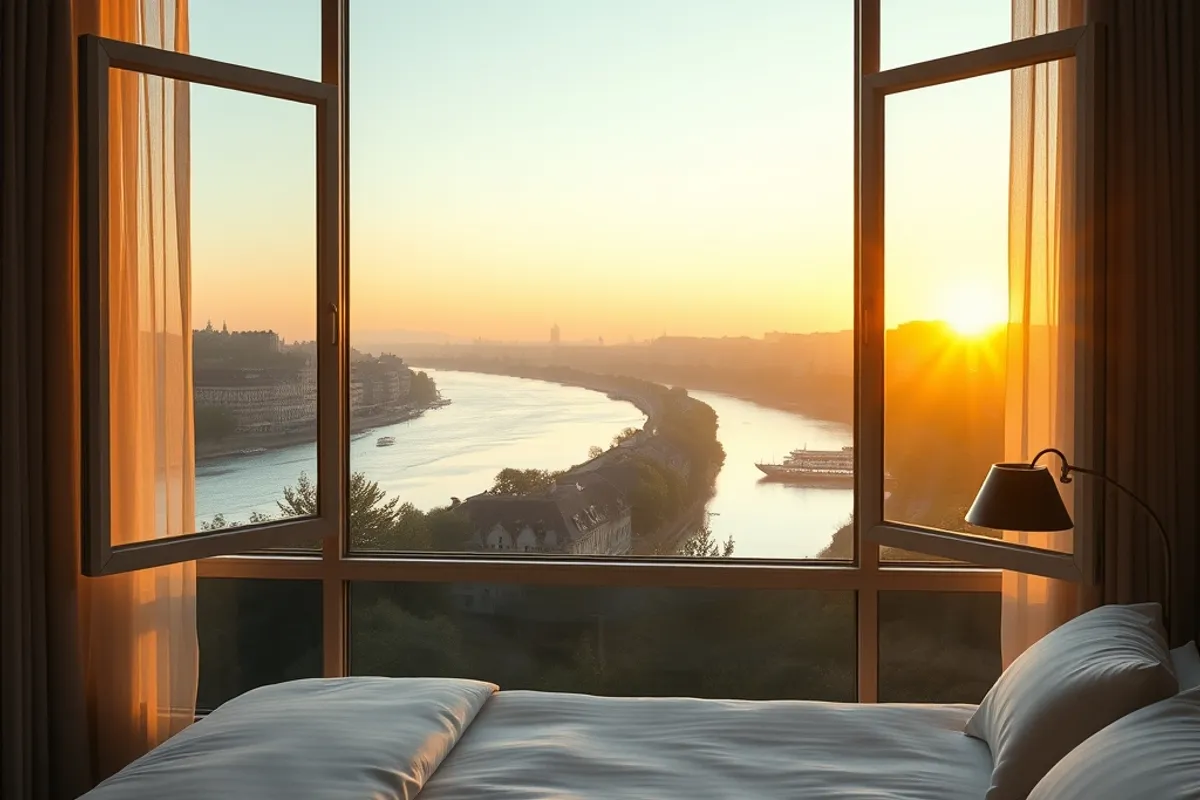
Hotels use the word riverside loosely. It can mean a room directly over the water, a building across a road from the bank, or a property fifteen minutes uphill with a view of a bridge from the roof. The difference matters because you are paying for the water, and the water is either part of the room or it is not.
What riverside really means
Check the map at street level, not just the pin. Is there a road, a tram line or a car park between the hotel and the river? Can you walk to the bank without crossing a barrier? A hotel on the second row can still be excellent, but it should not charge a front-row rate. Look at recent guest photos rather than the wide-angle shot from the roof.
Ask which side of the building your room faces. Many hotels sell a river view on the basis of one wing. If your booking does not guarantee the view, assume you are looking at the courtyard and decide whether the location still earns the price.
Room, floor and balcony
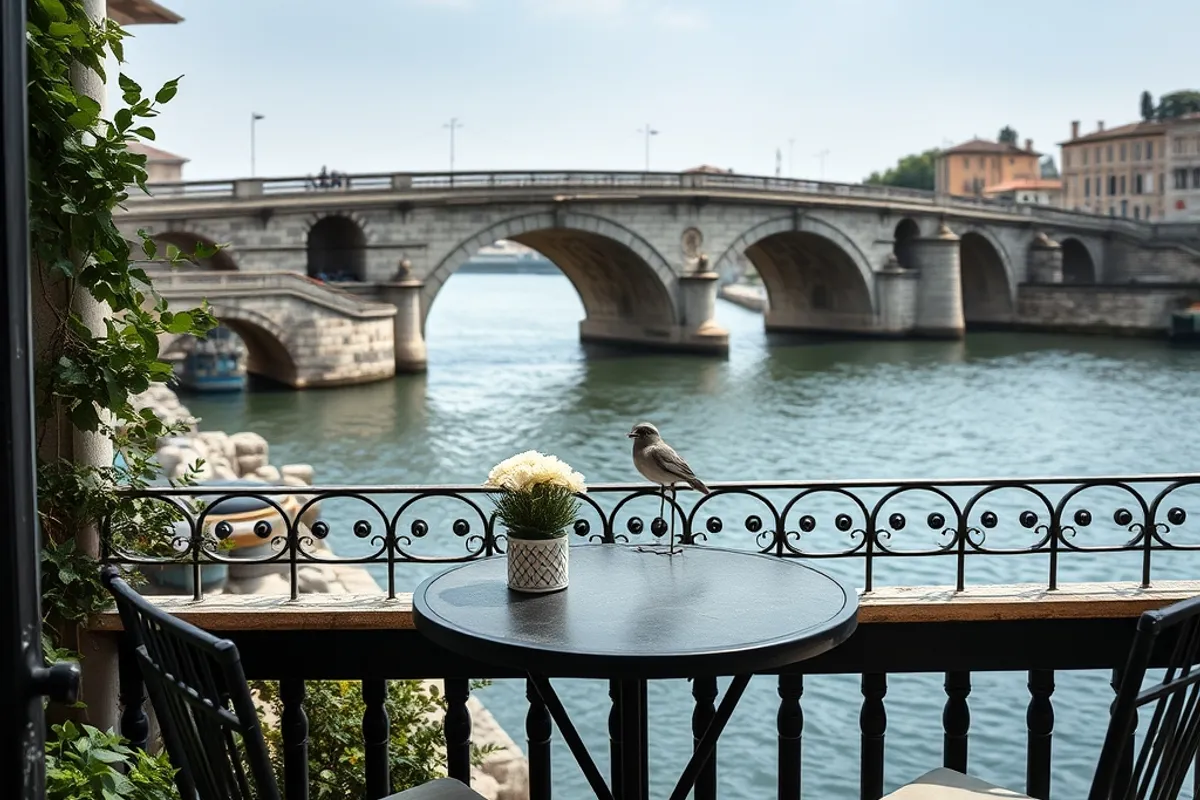
Upper floors are quieter and usually have the better view. Ground-floor rooms can open onto a terrace, which suits some travellers and feels exposed to others. Ask whether the balcony is private, shared or simply a window that opens. A French balcony is a rail, not a place to sit.
Check the direction of the afternoon sun. A west-facing room over water is beautiful and hot in summer; an east-facing room is cooler and gets the morning light. Neither is wrong, but the room description rarely tells you which one you are booking.
Flood, weather and access
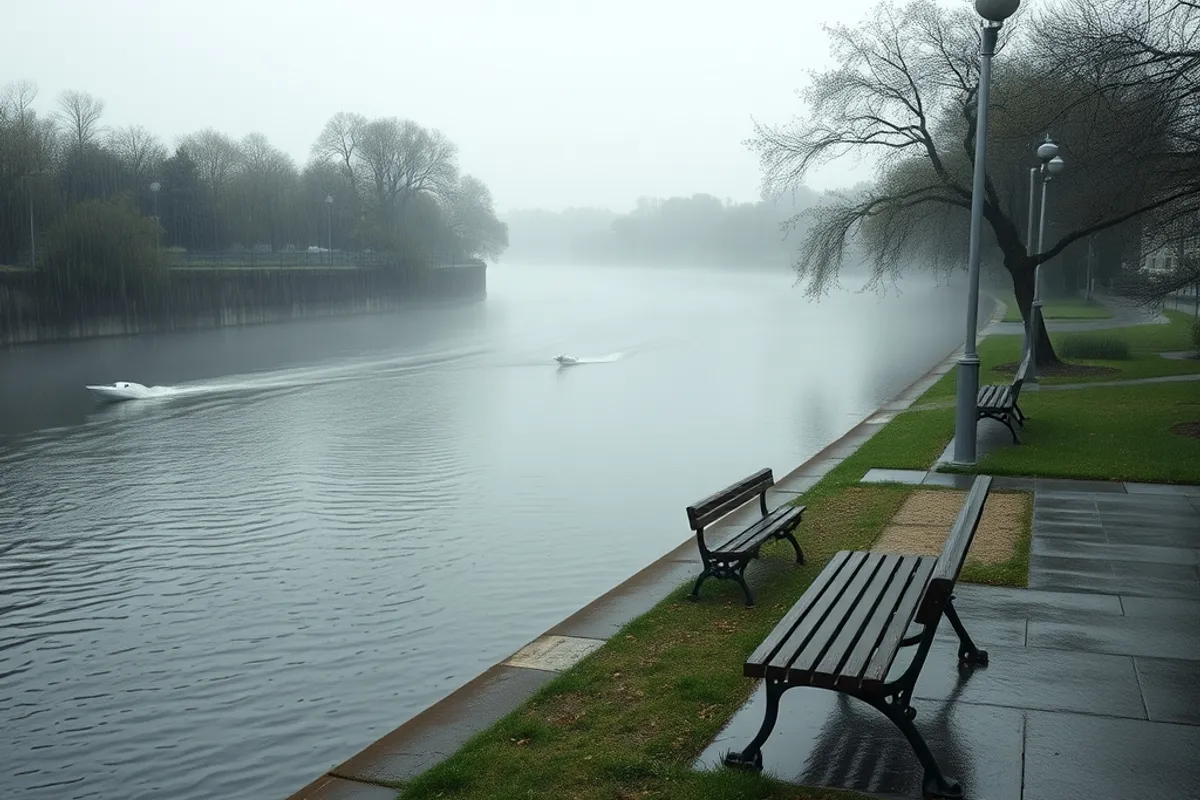
Rivers rise. Ask whether the hotel has had water in the building, which rooms are on the lowest floor and what happens to the riverside path in heavy rain. This is not a reason to avoid a river town, but it is a reason to know where your room sits. In some towns the promenade closes for weeks after a flood.
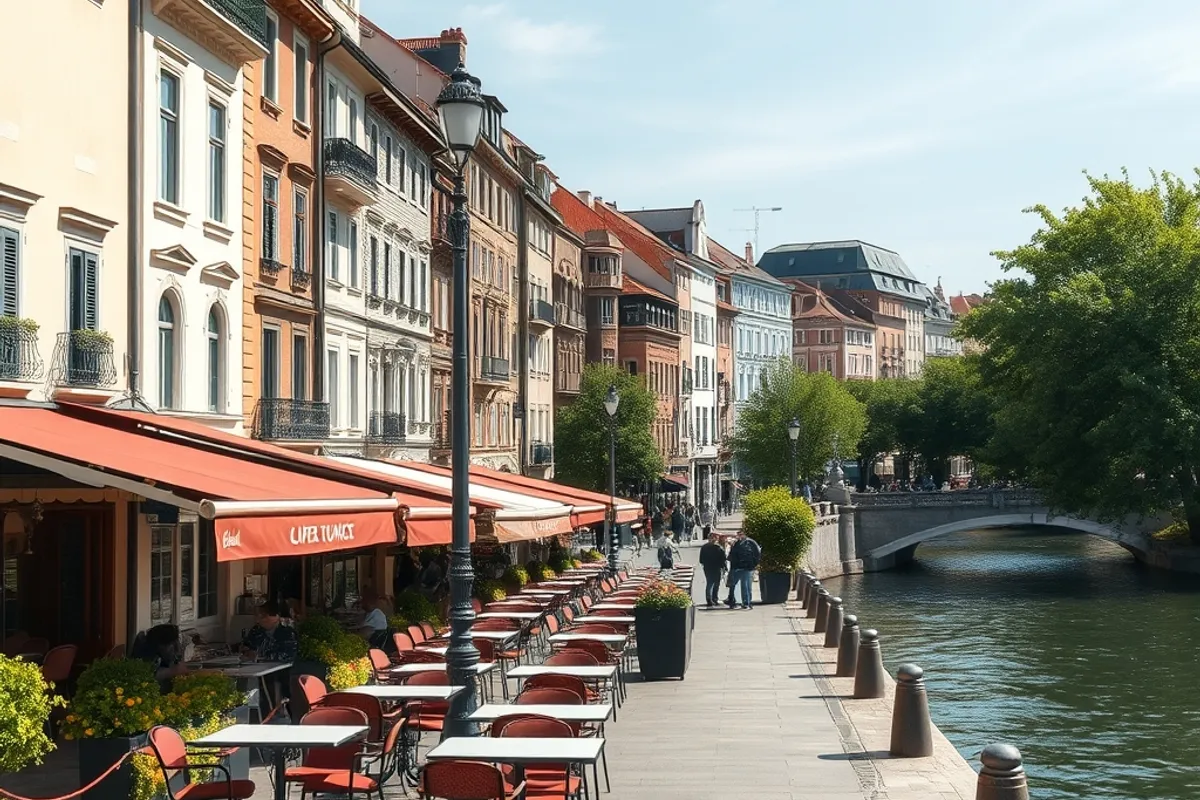
Check the walking route to the centre. A river hotel can be peaceful and still be a twenty-minute walk from dinner. If the path is unlit at night or the bridge closes, the location becomes a taxi cost. Look at the route on a map before you fall for the view.
Noise and the weekend problem
River towns are quiet on Tuesday and loud on Saturday. Promenade bars, tour boats and late walkers all send sound across water. Ask for a room away from the bar terrace and the bridge approach. If the hotel has double glazing but no air conditioning, you will choose between heat and noise in July.
Read the reviews that mention sleep, not just the ones that mention the view. A room above the kitchen or next to the lift is still a bad room with a river outside. Our lodge and cabin comparison covers the quieter alternatives if sleep is the priority.
Breakfast, food and the real rate
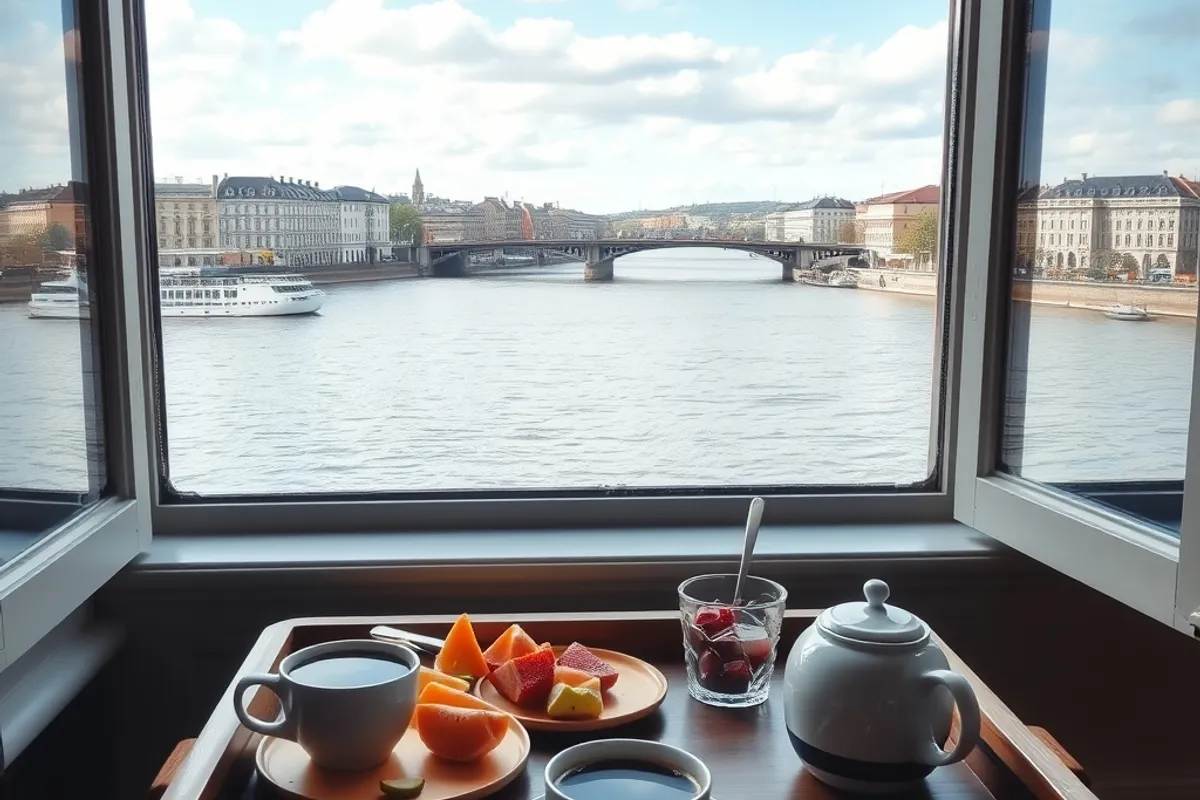
Breakfast on a river terrace is one of the genuine pleasures of this kind of stay. Check whether it is included, what time it starts and whether the terrace is open in the season you are travelling. A 22-euro buffet is not good value if you leave at seven for a train.
Add parking, city tax and any resort fee before comparing two hotels. Riverside parking is often tight and charged nightly. A hotel that looks 20 euros cheaper can cost more once the car is parked and breakfast is added. The total for the stay is the only useful comparison.
Booking and what to ask
Email the hotel with three questions: which floor, which view is guaranteed, and what is between the room and the water. Ask about the cancellation policy for river events and whether the restaurant takes non-residents. A good hotel answers clearly and puts the room type in writing.
If you are celebrating something, say so once and let it go. The best upgrades come from a hotel that has time and a free room, not from a long list of demands. Book direct if the rate is close, because it gives you a person to talk to when the river is high or the train is late.
The verdict
Pay for the water only when the room can use it. A high floor, a private balcony and a quiet side of the building are worth more than a famous bridge in the distance. If the budget is tight, choose a second-row hotel with a good breakfast and walk to the river; the view is free from the bank.